
Zana to drive AI innovation in new project transforming women’s heart health
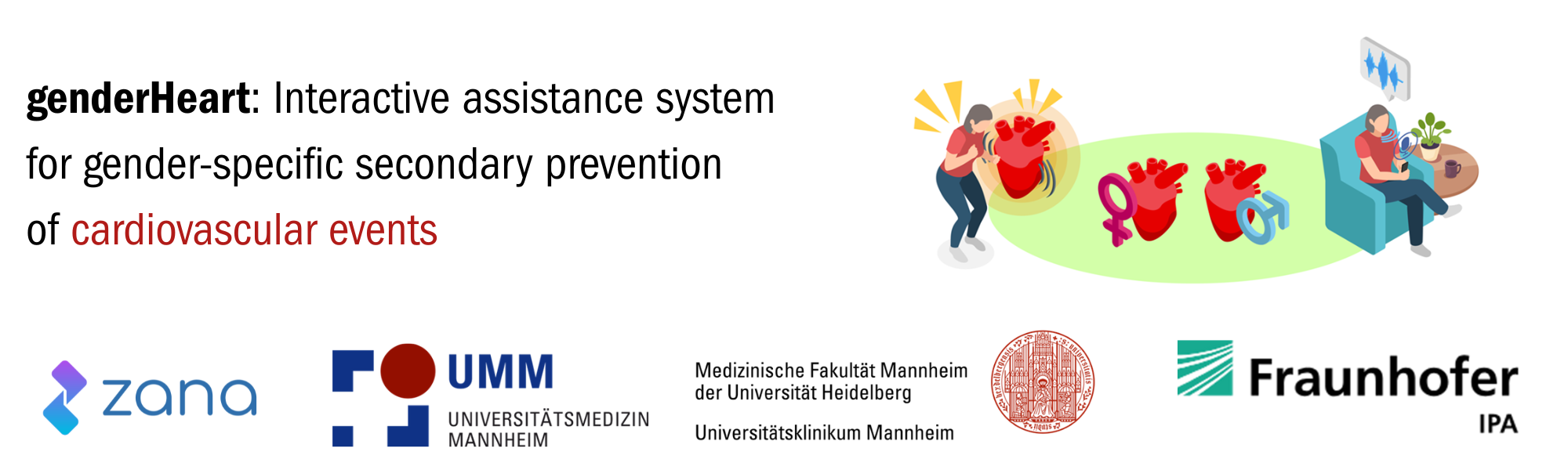
Zana Technologies announces the launch of genderHeart project, aimed at advancing secondary prevention and long-term recovery for women after major cardiovascular events. The initiative brings together leading partners, University Clinic Mannheim and Fraunhofer IPA, to address one of the most persistent gaps in heart health: poorer outcomes and limited tailored care for women following heart attacks and strokes. This initiative is supported with €1.316 million in funding by the German Federal Ministry of Research, Technology and Space (BMFTR).
Addressing an urgent unmet need in women’s heart health
Despite medical progress, women continue to experience higher complication rates and worse long-term outcomes after cardiovascular events. Studies show that within the first year after a heart attack, more than 10% of women suffer a recurrent event such as another heart attack, stroke, or cardiovascular-related death. Hormonal changes after menopause further increase cardiovascular risk, yet women are still less likely to receive optimal treatment or reach recommended targets for LDL cholesterol, blood pressure, and glucose control.
Clinical research has historically underrepresented women, resulting in limited evidence and a lack of tailored follow-up strategies. The genderHeart project directly tackles this gap by developing an interactive digital assistant designed to support women throughout their recovery with continuous monitoring, guided self-assessments, and personalized risk insights.
Zana’s role: pioneering AI voice biomarkers for cardiovascular risk prediction
As a core innovation partner, Zana will develop the project’s AI-based voice biomarker platform, enabling early detection of signs that may indicate cardiovascular deterioration. Through a mobile app, patients will regularly record short voice samples, which Zana’s models analyze alongside clinical and self-reported data. The goal is to identify symptom changes earlier, reduce avoidable complications, and support more proactive, personalized care.
Zana will also lead usability testing throughout the development cycle to ensure the system fits seamlessly into women’s daily routines and supports true patient empowerment.
“Women’s cardiovascular health has been overlooked for far too long. With genderHeart, we are combining clinical excellence with advanced AI to give women better tools, earlier insights, and more personalized support after a life-changing cardiac event,” said Dr.-Ing. Julia Hoxha, CEO and Co-Founder of Zana.
A disruptive approach: digital precision medicine for gender-sensitive cardiovascular care
Over the 6-month observational period, the project plans to enroll 200 participants. The system supports data collection through an avatar-guided process, including heart rate, blood pressure, oxygen saturation, glucose, and LDL cholesterol with the smart TEDIAS Chair from Fraunhofer IPA. Regular laboratory analyses, such as cardiac biomarker measurement and hormone profiling, deepen the clinical picture and enable a more precise understanding of individual recovery patterns.
Zana contributes its pioneering voice biomarker technology, allowing participants to record short speech samples via a mobile app. These are analysed by AI models designed to detect early signals of cardiovascular deterioration, opening an entirely new, non-invasive window into heart health. All data streams are integrated to deliver a personalized risk assessment tailored to each patient’s physiology and recovery trajectory.
“With genderHeart, we are bringing digital innovations together with everyday clinical practice in cardiology to finally close the gap in care for women after major cardiovascular events. Our goal is to understand their recovery in much greater detail and translate these insights into truly personalized long-term prevention and follow-up,” said Prof. Dr. Anna Lena Hohneck.
A consortium built for real-world impact
Zana Technologies leads the development of AI voice biomarkers, digital assistant design, and usability testing. University Clinic Mannheim coordinates the study, providing clinical leadership and medical data analysis under the direction of Prof. Dr. Anna Lena Hohneck. Fraunhofer IPA develops the system architecture, sensor integration, and digital assistant for patient process guidance and usability with the clinical environment. This contributions are crucial to bring the innovation together into a unified care solution.